
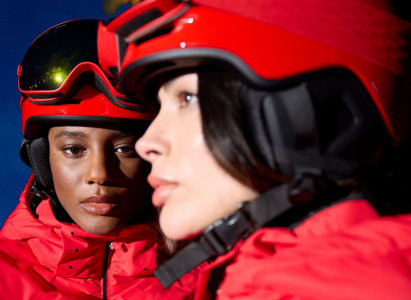
A ski helmet is arguably one of the most important pieces of your ski wardrobe. A correctly fitted helmet not only offers high levels of protection from falls, slips and tumbles. Studies have shown that not wearing a helmet puts you at higher risk of a serious injury. Essential Studies carried out a survey in which they found 65.7% of people who have been injured previously believe that their helmet prevented them from having a more severe injury.
Here at Dare 2b, we live and breathe skiing and snow sports, and we have created this guide that covers how to fit your next ski helmet, the different styles of helmets available and any other features you may want to look for.
How to Fit a Ski Helmet
To find the right sized helmet, you need to know the size of your head. Using a soft/fabric tape measure, measure the circumference of your head starting around your eyebrows at the front, then above your ears and back past the widest part of your skull at the back, also known as the occiput.
Once you have the size, you have a rough guide on where to start looking. When it comes to the fit of a helmet, you want to find one that is snug without being too tight. If you are someone who prefers to wear a beanie or hat under your helmet, take that into account. When trying the helmet on, make sure it's sat just above the eyebrows, the chin strap has been tightened and there's no gaps between your head and the liner. Most helmets have an adjuster at the back of the helmet that helps tighten or loosen slightly. If you have a favourite pair of goggles, take them with you to see how they fit on the helmet.
Different Types of Ski Helmets
There are two main types of helmets that you will see as you're shopping, hard shell and in mould, you also then have a hybrid version and some more specialised types that are marketed to racers/snow sport competitors.
- Hard Shell Ski Helmets - this style has two seperate pieces, the hard outer shell and the inner foam liner. The hard shell (as the name suggest) offers a high level of protection from any impacts whereas the foam liner helps to absorb shock. This style of helmet is known for its durability and a good choice for those more challenging slopes or terrains.
- In Mould Ski Helmets - this style of ski helmet has a hard wearing outer shell that has been fused to the inner foam liner. This liner again has shock absorbing properties, but it doesn't have any excess weight thanks to the lighter outer shell. With the way these helmets are constructed, better ventilation and more intricate designs can be used.
- Hybrid Ski Helmets - as the name suggests, this style of helmet combines the best of both in mould and hard shell. This means they have the lightweight comfort of in mould but the higher levels of durability that comes with hard shell, making this the perfect choice for both skiers and snowboarders.
Each of these helmet styles all have their own positives and negatives, so it's recommended to try different styles to see what you prefer.
Other Helmet Features to Look Out For
Other features you may want to look out for when shopping for your next snowsports helmet includes ventilation, adjustable vents help to regulate your temperature and prevent any overheating. Some helmets are now able to accommodate audio or Bluetooth systems which means you're able to listen to music or communicate whilst you're out on the slopes.
When it comes to choosing the right ski helmet for you, take into account what you need from the helmet. Are you looking for the highest level of protection and you're not too bothered about it weighing slightly more? Or do you want to want to be listening to some sweet tunes whilst you're shredding the slopes? Whatever extra features you do want, you need to make sure that the helmet fits correctly!
Once you have purchased a suitable ski helmet, you need to look after it to get the most out of it, and of course we have a blog to help with that, you can check out our How to Look After Your Ski Helmet guide.